
The Role of Edge AI in Industrial and Government Applications
Edge AI is reshaping how industrial and government systems operate by processing data directly at the source. Discover the use cases, architectural requirements, and real-world challenges driving its adoption across manufacturing, healthcare, smart cities, and public sector applications.
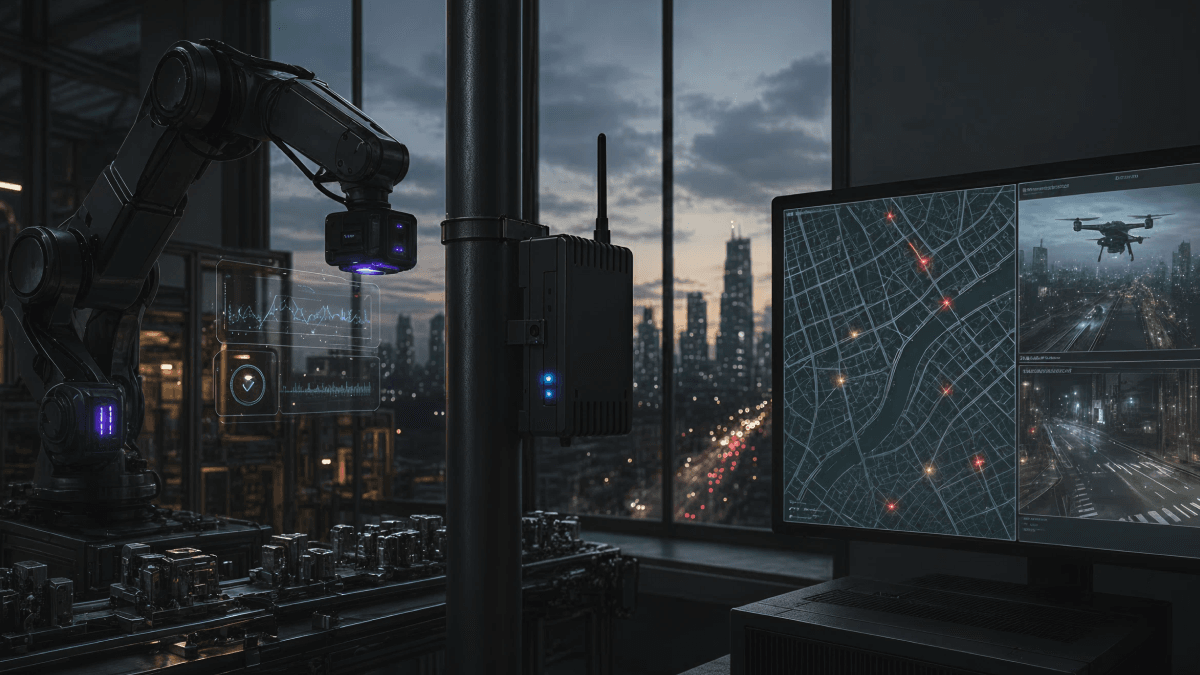
Artificial Intelligence requires significant computational resources to process information and execute machine learning models. For many applications, centralized cloud computing remains the right architecture. Cloud platforms offer scalability, powerful processing, and the ability to train and update large models efficiently. However, as AI moves into more operational environments, there are specific scenarios where sending data to a distant server and waiting for a response is simply not viable. When a robot arm on a factory floor needs to detect a defect in milliseconds, or when a sensor in a remote agricultural plot has no internet connection, or when a government system must ensure that citizen surveillance data never leaves the device it is captured on, cloud processing alone cannot meet those requirements. This is where Edge AI becomes essential.
Edge AI addresses these constraints by moving the inference engine directly to the periphery of the network, where data is generated. Rather than transmitting information to a central server, on-device compute resources itself handles the processing and acts on it locally. Sensors, industrial machines, and cameras can analyze data in real time without depending on a cloud connection. It is not a replacement for cloud AI but a complement to it, designed for environments where latency, connectivity, or data sovereignty make centralized processing insufficient.
This article examines how edge AI is being applied across industrial and government sectors and the architectural and operational requirements driving its adoption.
Why Edge AI Is Becoming Essential in Industry and Government
The scenarios where cloud-only AI falls short span a wide range of industries and contexts. In a semiconductor fabrication plant, a single production line can generate hundreds of gigabytes of sensor and imaging data per hour. Transmitting all of that to the cloud for analysis is expensive and introduces delays that are incompatible with real-time quality control. In a hospital intensive care unit, wearable monitors track patient vitals continuously, and an AI system that performs real-time analysis on ECG to detect critical cardiac arrhythmia cannot wait several hundred milliseconds for a cloud round trip before alerting a clinician. In a government border monitoring system, transmitting raw video feeds from hundreds of cameras to a central server raises data sovereignty concerns, and in many jurisdictions would not be permitted under privacy law. In a rural agricultural deployment, the infrastructure for a reliable cloud connection may simply not exist.
Across each of these cases, the requirement is not simply to use AI, but to deploy it in a way that works within the physical, legal, and operational constraints of the environment. Edge AI makes this possible by conducting inference locally , filtering what gets transmitted, and acting on insights in real time.
Architectural Requirements Driving the Transition to Edge AI
The move toward edge AI deployment is driven by several architectural requirements, not just performance preferences:
- •
Low Latency for Safety-Critical Operations Cloud processing typically introduces round-trip delays ranging from 100 to 500 milliseconds, and in some conditions significantly more [1]. For many operational environments, this delay is not acceptable. Industrial robotic arms and autonomous quality inspection systems need to make decisions within 15 to 45 milliseconds to prevent damage or safety incidents [2]. In healthcare, an AI system monitoring a patient's cardiac rhythm in an ICU cannot introduce multi-hundred-millisecond delays before triggering an alert. Edge AI processes data directly on the device, eliminating the network round trip and enabling real-time response regardless of network conditions.
- •
Bandwidth Management for Data-Intensive Environments In continuous manufacturing operations such as semiconductor wafer inspection or pharmaceutical packaging lines, industrial facilities generate petabytes of raw sensor and imaging data daily. Transmitting all of this to the cloud for analysis is not practical at scale. Edge AI processes this data locally and sends only critical alerts or summary insights to the central network, significantly reducing transmission costs and network load.
- •
Operational Continuity Without Connectivity Edge AI devices continue to function independently of internet connectivity. If a network outage occurs, the device continues to collect and process data locally, syncing with the cloud only when the connection is restored. This is particularly important in environments like remote mining operations, offshore energy platforms, or agricultural deployments in rural areas where connectivity is unreliable. For these scenarios, continuous operation is not optional, and cloud dependency would make the system non-functional precisely when it is most needed.
- •
Data Sovereignty and Privacy Compliance Consider a government border monitoring system that uses camera feeds to detect unauthorized crossings. Transmitting that raw video to a central server increases the risk of interception and may conflict with data sovereignty regulations that require sensitive data to remain within a specific jurisdiction. Edge AI addresses this by analyzing the video locally on the device and transmitting only derived metadata, such as a detected anomaly alert, rather than the raw footage. The sensitive data never leaves the device. For government agencies operating under privacy legislation, this is often a compliance requirement rather than a design preference.
Edge AI in Industrial Applications
Manufacturing and Predictive Maintenance
In manufacturing, unplanned equipment downtime results in significant financial losses. Edge AI enables predictive maintenance by continuously analyzing data from sensors that monitor machine vibration, acoustics, and temperature. Convolutional Neural Networks (CNNs), deployed on edge microcontrollers, analyze vibration signal patterns from rotating machinery and detect deviations that lead to mechanical failure. Long Short-Term Memory (LSTM) networks are well suited to processing time-series sensor data and can identify degradation trends that indicate an impending fault hours or days before it occurs. These models run inference directly on edge hardware, detecting early signs of mechanical failure locally and alerting operators in time to schedule intervention. Implementing edge AI for predictive maintenance has been shown to reduce unplanned downtime by up to 45% and decrease overall maintenance costs by 24% to 30% [3].
Automated quality control systems use edge-powered computer vision deployed on platforms such as NVIDIA Jetson to inspect products on the assembly line [4]. Smart cameras running inference locally can process images in real time to detect surface defects, dimensional anomalies, or contamination, down to 0.1 millimeters, without transmitting footage to the cloud. In semiconductor manufacturing, for example, edge AI systems deployed on inspection lines enable sub-second visual analysis of silicon wafers, classifying defect types and triggering alerts instantly, while remaining resilient during network disruptions.
Healthcare Monitoring
Healthcare is another environment where edge AI is becoming a practical requirement. In an intensive care unit, wearable and bedside monitoring devices continuously track patient vitals including heart rate, oxygen saturation, respiratory rate, and ECG signals. When AI modes need to detect a life-threatening arrhythmia or a rapid deterioration in patient condition, sending that data to the cloud and waiting for a response is not viable. Processing needs to happen on the device or at a local edge server within the ward. Edge AI enables this by running anomaly detection models directly on monitoring hardware, alerting clinical staff within seconds of a deviation from normal baselines. Beyond ICUs, edge AI is also being deployed in ambulances and mobile diagnostic units, where connectivity cannot be guaranteed and real-time analysis of patient data is critical to informing decisions before a patient reaches a hospital.
Supply Chain and Logistics
Logistics networks utilize edge AI and Internet of Things (IoT) sensors to track assets and monitor storage conditions. Smart sensors in warehouses and transport vehicles analyze temperature fluctuations and stock shortages on-site. This allows organizations to identify bottlenecks and optimize shipping routes in real time. For example, P&O Ferrymasters deployed AI-driven asset tracking across their logistics network to optimize cargo capacity by 10% and improve labor productivity, using real-time sensor data processed at the edge to make decisions without waiting for cloud analysis [5].
Edge AI in Government and Public Sector Applications
Case Study: Rootcode’s Clamigo Project in Precision Agriculture
In neighborhoods like Campa in Porto, Portugal, community farming is woven into everyday life. Families tend small plots of land that provide food for entire households. But community farmers face a growing challenge. Weather patterns have become unpredictable, soil conditions are shifting, and pests are increasingly difficult to manage without the institutional knowledge that comes from large-scale professional farming. Traditional generational knowledge is no longer enough. Farmers are left guessing when to water, what to add to the soil, and how to protect their crops.
To address this, Rootcode partnered with the City of Porto to build Clamigo, a smart farming solution that gives community farmers access to holistic agricultural guidance for organic farming.

Hardware and Edge Processing
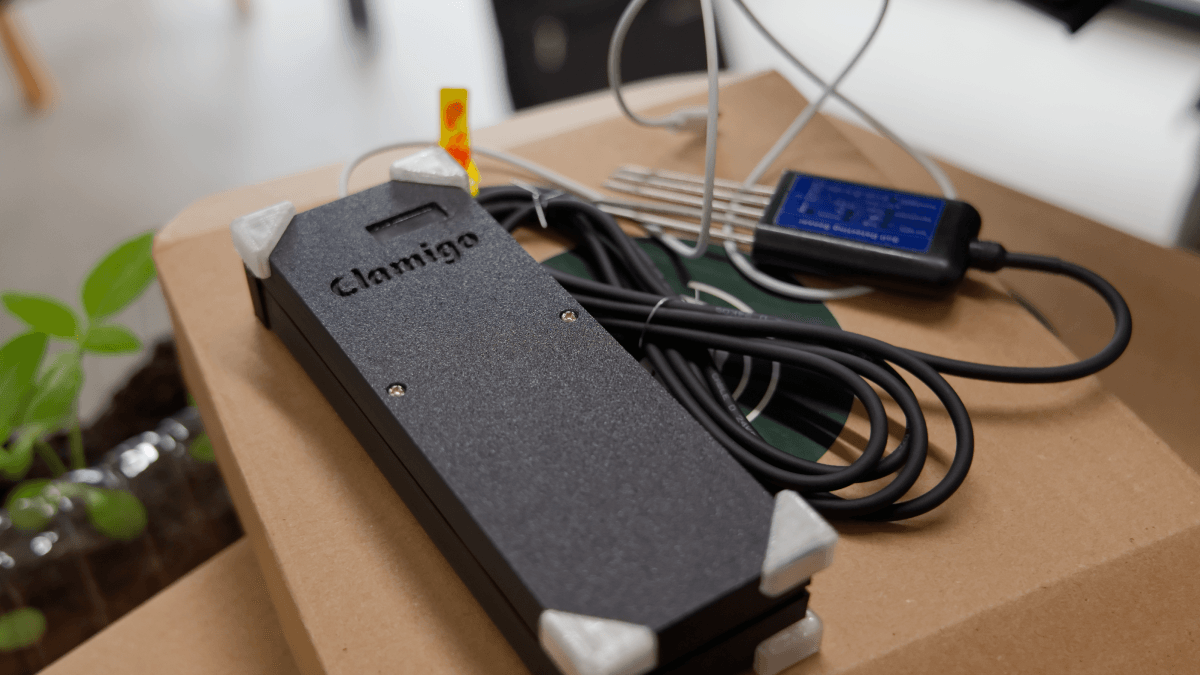
The physical component of Clamigo is a custom-fabricated sensor unit that measures soil nitrogen, phosphorus, potassium, pH levels, Electrical Conductivity, humidity, and temperature. The hardware uses an ESP32 processing chip to handle data locally. Because many of Porto's community gardens are in areas with unreliable connectivity, Clamigo relies on edge computing as a core architectural requirement. Lightweight AI models run directly on the sensor to continuously evaluate soil conditions. Rootcode optimized the system using model quantization, a technique that compresses the AI model so it can run efficiently on devices with limited power and memory. If the sensor loses internet connectivity, it continues to collect and cache data locally, syncing and delivering recommendations once the connection is restored.
Software and AI Implementation
The sensor transmits data to the Clamigo mobile application, which connects to a cloud-hosted AI architecture. Rootcode used a fine-tuned large language model trained specifically on organic farming practices. To ensure accuracy and reduce AI hallucinations, Clamigo uses a model council architecture in which candidate models propose farming actions while reviewer models evaluate and approve the suggestions before they reach the farmer.
The mobile app presents farmers with a full soil health analysis covering NPK levels, pH, and electrical conductivity, alongside an assessment of how current weather conditions are affecting plant growth. Based on this, farmers receive organic treatment recommendations and a simplified to-do list guiding them on when to water crops or manage pests using accessible remedies such as eggshells or tea leaves, without the use of artificial fertilizers. The interface was co-created with elderly farmers to ensure it was accessible to users with limited technical backgrounds. Read more Here.

Smart City Infrastructure
Edge AI serves as a foundational layer for smart city management. For instance, in urban traffic management, edge-based video analytics are installed directly at intersections rather than streaming footage to a central server. Object detection models running on edge hardware classify vehicles, cyclists, and pedestrians in real time and feed that data to signal timing algorithms. In New Taipei City, the local government deployed an edge AI traffic vision system at key intersections that runs inference directly on edge devices, adjusting signal timings dynamically based on live traffic flow without requiring connectivity to a remote server [6]. Cities that have implemented edge-based AI traffic management have seen reductions in congestion of around 20% and improvements in air quality from reduced idling [7].
Waste management is also optimized through edge computing. Cities such as Barcelona have integrated IoT sensors into waste bins, utilizing local AI models to predict bin overflow with 94.1% accuracy. This data optimizes garbage collection routes, resulting in a 20% reduction in fuel consumption and a 72.7% decrease in missed pickups [8].
Public Safety and Defense
Public safety agencies use edge AI for rapid disaster response. During large-scale emergencies like wildfires or earthquakes, first responders process audio and video feeds at the "tactical edge" using mobile command units. This localized processing ensures that emergency teams can coordinate resources and maintain situational awareness even if central communication networks are compromised or destroyed.
In national defense, edge AI is a strict requirement for operations in disconnected environments. Unmanned Aerial Systems (UAS) and ground robots use on-board edge processing to analyze imagery and autonomously classify threats. For example, technology firm Safe Pro Group was recently awarded a $1 million government subcontract to supply AI-powered edge processing systems for defense applications [9].
Key Challenges in Edge AI Adoption
While edge AI provides distinct operational benefits, organizations face several technical challenges during implementation.
- •
Hardware Constraints and Cost Edge devices operate under strict Size, Weight, and Power (SWaP) constraints. Unlike cloud servers, local sensors have limited memory and computational capacity. Developers must compress and optimize AI algorithms so they can run efficiently without draining battery life or overheating the device. This model optimization work requires specialist expertise and adds development time and cost. Hardware costs are also a factor: AI accelerators for edge devices can range from $500 to $5,000 per unit [10], which becomes significant at scale across a large industrial deployment.
- •
Model Management and Updates at Scale Once an edge AI system is deployed across hundreds or thousands of devices, keeping the models current becomes a significant operational challenge. Devices often operate in environments with unreliable connectivity, and without a robust over-the-air update mechanism, models can grow stale over time, continuing to perform on patterns that no longer reflect current conditions. Managing this at scale requires dedicated infrastructure for secure model delivery, version control across device fleets, and rollback capability if an update causes problems. This ongoing operational overhead is easy to underestimate during early project planning, but it becomes one of the most resource-intensive aspects of running a production edge AI deployment.
- •
Security Across Distributed Devices When deploying models across a large number of physically distributed devices in uncontrolled environments, maintaining consistent security standards becomes more complex. Each device is a potential attack surface, and without signed and verifiable update mechanisms, vulnerabilities can be introduced through model delivery pipelines or firmware. Enforcing security policies uniformly across devices deployed across different facilities, regions, or operators requires dedicated governance and tooling, and the consequences of a compromised edge device in a critical infrastructure setting can be substantial.
Conclusion
Edge AI is an architectural response to the specific constraints that arise when AI is deployed in operational environments where latency, connectivity, data sovereignty, or bandwidth make centralized processing insufficient. Whether predicting machinery failure on a manufacturing floor, providing offline agricultural recommendations to community farmers in Porto, or enabling smart city infrastructure to operate in real time, edge AI allows organizations to place intelligence exactly where it needs to be. As hardware capabilities continue to improve and model compression techniques advance, the range of environments where edge AI is viable will continue to expand, making decentralized intelligence an increasingly standard part of how industrial and government systems are designed.
Ready to Transform Your Business? Are you looking to integrate edge computing and artificial intelligence into your own operations? At Rootcode, we specialize in building great products tailored to your specific needs. Let's talk about how to transform your business.
Share this article:
Rootcode Editorial
Content Specialist
The Rootcode Editorial team writes across design, AI, and engineering -bringing the perspectives and knowledge of the Rootcode team to a wider audience.
Räägime sellest, kuidas oma ettevõtet ümber kujundada.



Rootcode EU
Sakala tn 7-2,
Kesklinna linnaosa,
Tallinn,
Harju maakond,
10141, Estonia

Rootcode Sri Lanka
25/M1, 25,
St. Anthony's Mawatha,
Colombo 00300,
Sri Lanka
+94 112 574 572






© 2026 Rootcode. All Rights Reserved