
How Rootcode Solves Complex AI Engineering Challenges
Explore how Rootcode solves complex AI engineering challenges for governments and global enterprises. Discover how secure AI platforms, real time systems, and custom architectures power critical infrastructure and high stake enterprise solutions.

Building a standard mobile app or a website is a common task in the software world. However, the true test of an engineering team lies in solving high-stake, complex challenges. These are the problems involving massive scale, critical infrastructure, and cutting-edge Artificial Intelligence integration where failure is not an option. At Rootcode, we do more than just writing code. We design and build custom architectures for global enterprises and governments.Here are some key examples of how our teams engineered solutions to complex, real-world problems.
Secure AI for Government Data
Estonia is widely recognized as a global leader in digital governance, having built a society where citizens can access nearly all government services online. However, the Government of Estonia faced a significant problem in modernizing its backend operations. They needed a way to let various ministries benefit from Artificial Intelligence, from the Police and Border Guard Board to the Ministry of Education and Research. The challenge was that they needed a centralized AI training platform, but strict data privacy laws and security concerns meant they could not simply upload sensitive state data to a public cloud or allow data to be exchanged between departments.
Rootcode designed an AI model training platform with a multi-tenant architecture. This technical design ensures total isolation between departments. It means the Ministry of Education can upload data and train a model without that data ever being accessible to other agencies or leaving the secure government network. We implemented privacy-preserving mechanisms such as anonymization throughout the entire data lifecycle, from ingestion to inference, ensuring full compliance with EU regulations. On top of this complex backend, we built a user-friendly interface that allows non-technical officials to upload datasets and train classification models with simple clicks. This solution successfully balanced the strict requirements of national security with the need to democratize AI across government institutions.

Real-Time Auctions Without Latency
Business depends on the speed of transactions for America's largest publicly listed powersports retailer, a NASDAQ-traded company. They handle a massive inventory of vehicles and run high-frequency online auctions where milliseconds translate directly to revenue. The engineering challenge was avoiding "race conditions." This occurs when two users bid at the exact same moment. If the system lags even slightly, it might accept a lower bid or fail to register the winner, which negatively affects user trust and loses revenue. Standard web request models were simply too slow for this environment. We engineered a high-concurrency architecture that moved away from traditional request-response cycles to WebSocket technology. WebSockets keep a communication channel open constantly, allowing for instant, two-way data transfer. However, the real engineering feat was building logic to ensure state synchronization across thousands of concurrent users. This ensures that every user sees the exact same price and bid status at the exact same millisecond, maintaining the integrity of the live auction regardless of the traffic load. Read more Here
AI for Managing Large Power Grids
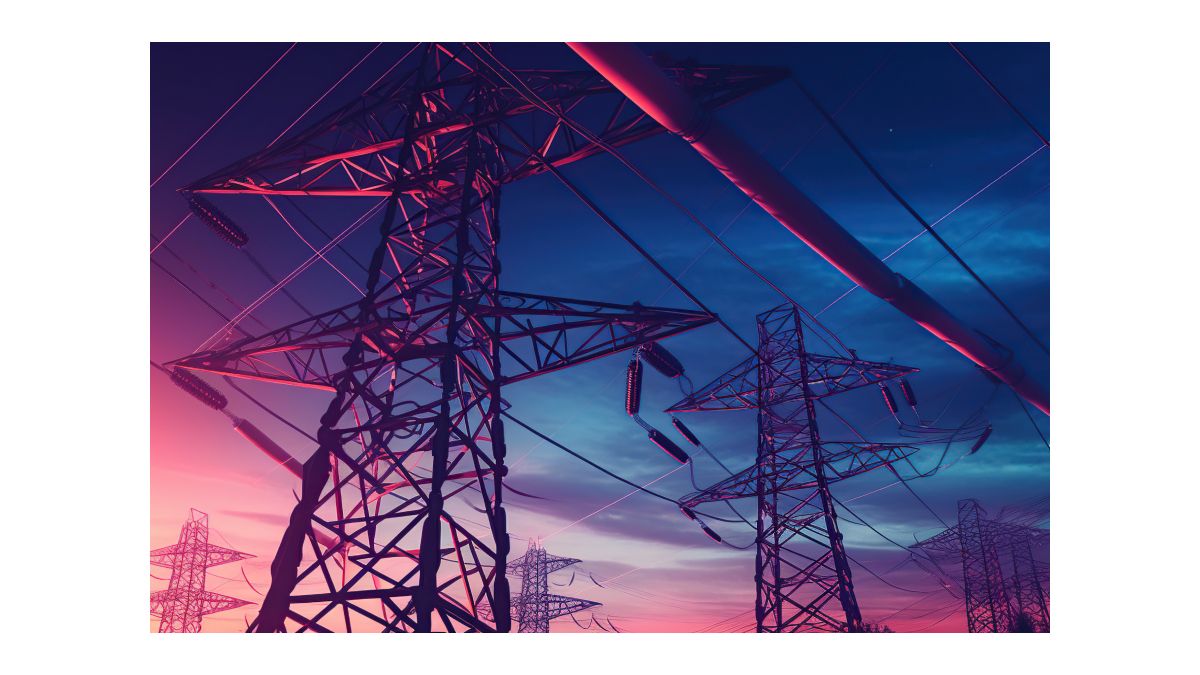
Operating power grids efficiently is one of the most difficult optimization problems in the energy sector. RTE (Réseau de Transport d'Électricité), the electricity transmission system operator of France, manages the largest high-voltage grid in Europe. To explore AI-driven grid optimization and failure prevention, RTE uses the Grid2Op framework, built on top of the GridApps-D open-source platform, to simulate realistic grid behavior and train intelligent control agents.
The key challenge was the way power substations were grouped. Existing approaches relied on static, manually defined clusters, which limited the AI’s ability to accurately predict grid behavior and respond to rapidly changing conditions.
Rootcode addressed this by implementing Reinforcement Learning with dynamic substation clustering. Instead of relying on fixed groupings, the system adapts to real-time grid connectivity, allowing multiple AI agents to collaborate and optimize grid topology under stress conditions. This significantly improved the system’s ability to prevent cascading failures and service disruptions.
The results were clear. AI agents trained in the Grid2Op and GridApps-D environment handled complex scenarios more effectively, increasing maximum reward scores from approximately 4,000 to over 30,000 and demonstrating a substantial improvement in grid stability.
Accurate AI for Enterprise Knowledge
Kendrion is a major Dutch manufacturing company that produces electromagnetic systems for the automotive and robotics industries. Like many established enterprises, they had decades of historical project data locked away in PDFs and different files. They wanted an AI Co-pilot to help managers answer specific questions like "What were the specifications for Project X in 2010?" The problem is that standard Large Language Models (LLMs) often "hallucinate," confidently making up incorrect facts. In the manufacturing sector, a made-up specification can be disastrous. To turn generic AI into a reliable business tool, we implemented a RAG (Retrieval-Augmented Generation) architecture. We built a data pipeline that continuously extracts text from Kendrion’s documents and converts them into "embeddings," which are numerical representations of text. When a user asks a question, our system does not guess. It first uses a semantic search engine to find the exact documents relevant to the query. The system then feeds only those specific documents to the LLM and instructs it to answer using only that source material. This hybrid approach drastically reduced error rates, allowing users to retrieve precise insights while minimizing computational costs. We also implemented guardrails using NVIDIA NeMO to prevent hallucinations and ensure that the platform is reliable for high stakes decisions. Read more Here
Conclusion
Whether it is building sovereign AI training platforms for the Government of Estonia or managing the power grid for Europe, the hardest challenges require more than just coding. They require a deep understanding of the domain and the ability to engineer custom solutions that fit specific constraints. We turn complex problems into solutions with custom engineering and AI technology.
Share this article:
Let’s talk about how to transform your business.


Rootcode EU
Sakala tn 7-2,
Kesklinna linnaosa,
Tallinn,
Harju maakond,
10141, Estonia

Rootcode Sri Lanka
No. 42,
Level 15,
Nawam Mawatha,
Colombo 00200,
Sri Lanka




© 2026 Rootcode. All Rights Reserved